
Introduction
On March 18, 2026 (announced publicly today, March 19), the U.S. National Highway Traffic Safety Administration (NHTSA) took a significant step in its ongoing oversight of Tesla’s advanced driver assistance technology. The agency upgraded its investigation into Tesla’s Full Self-Driving (Supervised) system — commonly known as FSD — from a Preliminary Evaluation (PE24031, opened in October 2024) to a full Engineering Analysis designated EA26002. This escalation directly affects an estimated 3,203,754 Tesla vehicles equipped with FSD across the United States, encompassing nearly every modern Model S, Model X, Model 3, Model Y, and Cybertruck on the road today.
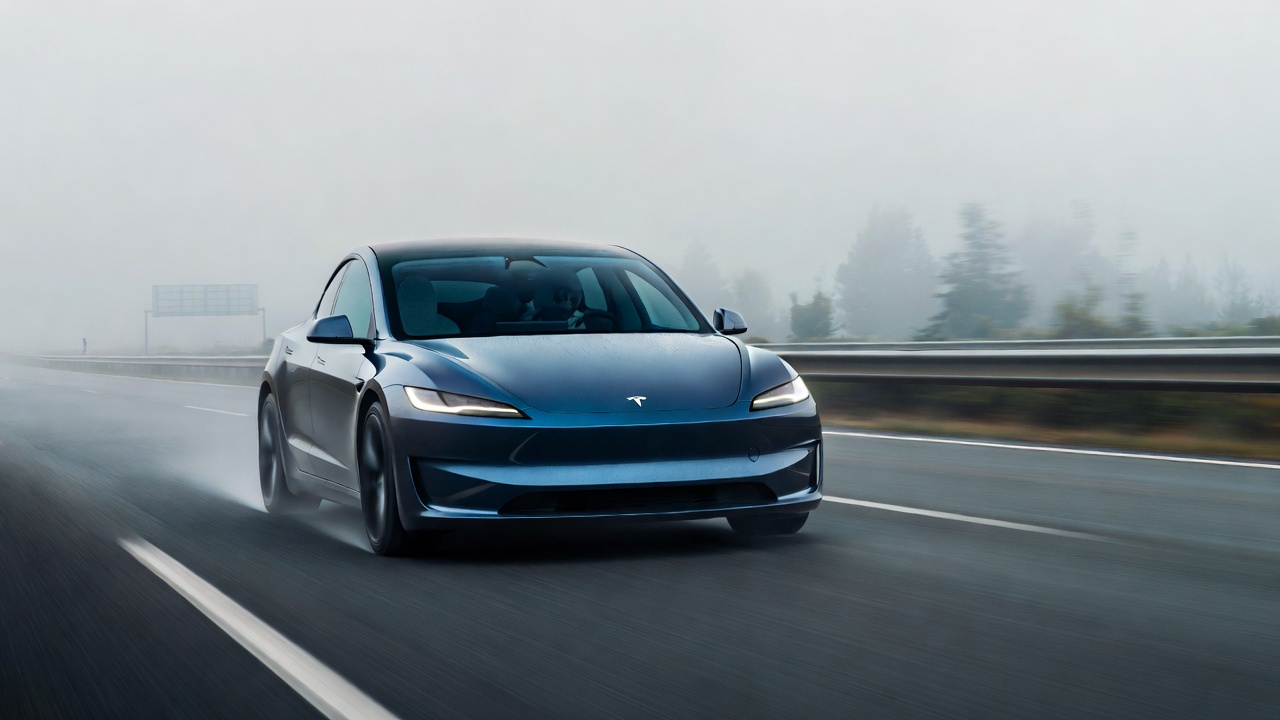
The core issue under scrutiny is straightforward yet critical for every Tesla owner who relies on FSD during daily commutes, highway drives, or urban errands: the system’s “degradation detection” capability when roadway visibility is reduced by common real-world conditions such as sun glare, fog, dust, or airborne obscurants. NHTSA’s documentation makes clear that in multiple reviewed incidents, FSD failed to recognize when its camera-based vision was impaired and did not issue timely alerts to the driver, sometimes only notifying the operator immediately before impact. In several cases, the system also lost track of or never detected a lead vehicle ahead.
This is not speculative concern — the probe now includes nine documented crashes, one of which was fatal (a pedestrian strike in reduced visibility), plus two injury incidents and six additional cases under active review. For the millions of American Tesla owners who have purchased or subscribed to FSD, this development carries immediate practical weight. It does not mean FSD is being pulled from vehicles today, nor does it imply an imminent recall, but it does signal that regulators are moving closer to requiring potential corrective action.
European owners are not directly impacted by this U.S.-specific probe, but the findings resonate strongly across the Atlantic. In Europe, where FSD rollout remains more limited and strictly supervised under evolving UNECE regulations (notably Regulation 171 on Automated Lane Keeping Systems), similar visibility and driver-handover requirements are already baked into type-approval processes. Owners in Germany, the Netherlands, or the UK who use FSD on approved roads can draw direct lessons from this U.S. scrutiny.
Importantly, NHTSA continues to emphasize that FSD is a Level 2 advanced driver assistance system (ADAS). Tesla itself stresses that drivers must remain fully attentive, hands on the wheel (or ready to intervene), and eyes on the road at all times. The escalation does not change that fundamental responsibility — it simply highlights areas where the technology’s safeguards need deeper validation.
In the sections that follow, we will dissect the investigation in detail, trace its history, analyze implications for U.S. and European owners, examine Tesla’s response and software improvements, provide concrete safety strategies you can implement today, and place the probe within broader industry regulatory trends. By the end, you will have a clear, actionable understanding of what this means for your daily driving and how to use FSD more confidently while the investigation unfolds.
Chapter 1: Investigation Details Breakdown — 3.2 Million Vehicles, Nine Crashes, and the Reduced Visibility Problem
The Engineering Analysis EA26002 explicitly targets the performance of FSD’s degradation detection system in “reduced roadway visibility conditions.” According to the official NHTSA filing, the problem is defined as: “Failure of the FSD’s degradation detection system, when encountering reduced roadway visibility conditions, to detect a degraded state and to warn the driver appropriately.”
Tesla’s FSD relies exclusively on a vision-only architecture (Tesla Vision) that transitioned away from radar in mid-2021. While this approach has enabled rapid software iteration and impressive capabilities in clear conditions, it introduces unique vulnerabilities when cameras encounter environmental interference. Common scenarios include:
- Intense sun glare washing out forward-facing cameras during dawn or dusk drives.
- Fog or mist reducing contrast and depth perception.
- Dust, pollen, or airborne particles (common in agricultural areas or after wind events) obscuring lenses.
- Internal camera fogging or condensation in varying temperature/humidity conditions.
In the nine crashes now under formal review (identified via Standing General Order reports and media sources), NHTSA found that FSD did not detect these impairments promptly. Alerts — when issued — arrived too late for meaningful driver intervention. In multiple instances, the system lost track of a lead vehicle entirely, leading to collisions.
The affected fleet is massive: every 2016–2026 Model S and Model X, 2017–2026 Model 3, 2020–2026 Model Y, and 2023–2026 Cybertruck equipped with FSD (Supervised) or the earlier Beta version. That 3.2 million figure represents the vast majority of Tesla vehicles currently on U.S. roads capable of running the latest FSD software. NHTSA estimates are conservative and could grow as more data is analyzed.
Sub-section 1.1: Understanding Reduced Visibility in Practical Terms Consider a typical Southern California commute on Interstate 5 during morning marine layer fog — a daily reality for thousands of Tesla owners. Or a Midwest highway drive into a dust storm after harvest season. Or a European mountain pass with sudden low clouds. In each case, human drivers instinctively slow down, increase following distance, and focus harder. NHTSA’s concern is that FSD’s degradation detection did not trigger the same instinctive response in the vehicle or provide the driver with sufficient warning to take over. The agency specifically notes that in reviewed crashes, the system “did not detect common roadway conditions that impaired camera visibility and/or provide alerts when camera performance had deteriorated until immediately before the crash occurred.”
This level of detail matters because it moves the conversation beyond abstract safety statistics into tangible driving scenarios that owners encounter regularly. The probe is not about exotic edge cases; it is about everyday environmental conditions that every driver experiences.
Chapter 2: History and Current Status — From October 2024 Preliminary Evaluation to Today’s Engineering Analysis
The investigation did not appear overnight. Its roots trace back to October 2024 when NHTSA opened PE24031 after four documented crashes in reduced visibility conditions, including the fatal November 28, 2023 pedestrian strike while FSD was engaged. That initial probe covered roughly 2.4 million vehicles and focused on whether FSD could safely operate when vision was compromised.
Over the ensuing 17 months, additional incidents came to light through mandatory Standing General Order crash reporting and public complaints. By early 2026, the scope had expanded to nine crashes (one fatality, two injuries) with six more under review. Tesla’s own post-incident analyses, shared with NHTSA, revealed that a software update to the degradation detection system — development of which began on June 28, 2024 (the day after the fatal crash report was submitted) — “may have affected” only three of the nine incidents.
On March 18, 2026, NHTSA formally upgraded the case to Engineering Analysis status. This phase involves deeper technical scrutiny: requests for detailed software code reviews, expanded crash data, testing protocols, and comparisons against peer manufacturers’ degradation handling. Engineering Analyses typically conclude within 12–18 months and represent the final investigative step before NHTSA can demand a recall or other corrective action.
The timing is notable. Tesla continues to push FSD wider availability and promises major leaps with upcoming versions (such as v14.3 currently in internal testing). Regulators are simultaneously intensifying oversight, creating a high-stakes environment for both the company and its owners.
Chapter 3: Impact on U.S. Owners and Europe Comparison
For the estimated 3.2 million U.S. Tesla owners running FSD, the immediate impact is informational and behavioral rather than operational. There is no recall in effect, no forced software disablement, and no requirement to stop using FSD today. However, the escalation underscores the importance of treating FSD exactly as Tesla and NHTSA describe it: a supervised assistance feature that demands constant driver readiness.
U.S. owners in states with high FSD adoption — California, Texas, Florida, New York — should pay particular attention during weather or lighting conditions known to challenge camera systems. The probe covers vehicles regardless of hardware version (HW3 or HW4), meaning both older and newer cars are included.
Sub-section 3.1: FSD Remains a Supervised System — A Critical Reminder Every NHTSA document and Tesla owner manual reiterates the same point: the driver is responsible at all times. FSD does not make the vehicle autonomous. The system’s visual alerts, steering wheel nags, and chime reminders exist precisely to keep drivers engaged. The current investigation highlights situations where those safeguards may not have provided enough lead time. European owners already operate under stricter frameworks. In the European Union and UK, FSD is approved only in limited “Supervised” mode on specific roads. UNECE Regulation 171 (Automated Lane Keeping Systems) mandates robust degradation detection, driver monitoring, and immediate handover capability. European type-approval processes require manufacturers to prove systems can detect and respond to visibility loss within strict timeframes — often more prescriptive than current U.S. rules. Owners in the Netherlands (where FSD testing is progressing) or Germany will recognize many of the same visibility concerns but benefit from regulatory environments that already demand stronger fallback mechanisms. The U.S. findings could indirectly influence future EU approvals or updates to existing ones.
Chapter 4: Tesla’s Response and System Improvements
Tesla has not issued a public statement specifically addressing today’s escalation (as of the latest reporting). Historically, the company responds to NHTSA inquiries by emphasizing continuous over-the-air (OTA) improvements, the supervised nature of FSD, and the volume of real-world data collected.
Internally, Tesla began developing an enhanced degradation detection update immediately after the 2023 fatal crash report. The company has told NHTSA that this update, once deployed, could have mitigated three of the nine incidents. NHTSA is now examining exactly when and to which vehicles that update was pushed, its technical capabilities, and whether further refinements are needed.
Owners should continue installing every OTA update promptly — many contain safety-related improvements to vision processing and alert logic even if not explicitly labeled as such. Tesla’s philosophy remains iterative: collect data, identify edge cases, and improve via software. The current probe tests whether that approach has kept pace with real-world safety expectations in degraded visibility.
Chapter 5: Practical Safety Strategies for Owners — What You Can Do Today
While the investigation continues, owners do not need to wait passively. Here are detailed, actionable steps that align with both NHTSA guidance and best practices from experienced FSD users:
- Maintain Full Attention and Readiness Keep hands on the wheel (or in the ready position), eyes on the road, and remain mentally prepared to intervene within 1–2 seconds. The steering wheel torque requirement and visual attention monitoring are your first line of defense.
- Monitor Visual and Audible Alerts Closely Pay special attention to the FSD visualization on the screen. If the displayed path becomes uncertain, lane lines flicker, or the lead vehicle icon disappears, disengage immediately. Many owners report that these visual cues appear before formal alerts.
- Use FSD Conservatively in Known Challenging Conditions Temporarily disable FSD (or switch to basic Autosteer) during heavy fog, intense glare at sunrise/sunset, dust storms, or heavy rain. These are exactly the conditions under review.
- Optimize Vehicle and App Settings Ensure cameras are clean (use the wiper fluid regularly and check for internal fogging in extreme weather). In the Tesla app, enable all safety notifications and review FSD usage reports. Keep software fully updated.
- Practice Smooth Takeovers Regularly practice disengaging FSD in safe environments so muscle memory kicks in during an emergency. Many owners recommend the “two-second rule” — if you feel any hesitation from the system, count to two and take over.
- Document and Report Incidents If you experience a near-miss or visibility-related hesitation, use the in-car voice command “Bug report” or submit via the Tesla app. Aggregated owner data helps Tesla improve and informs regulators.
- Consider Hardware Context HW4 vehicles generally have higher-resolution cameras and better processing, but the probe covers both HW3 and HW4. No hardware recall is suggested at this stage.
Implementing these habits turns the regulatory spotlight into a personal safety advantage. Thousands of owners already drive millions of FSD miles daily without incident by combining the technology with vigilant human oversight.
Chapter 6: Industry Regulatory Trends — NHTSA vs. Europe’s UN-R-171 and Broader ADAS Context
This investigation fits into a larger global pattern of maturing oversight for Level 2+ systems. NHTSA’s approach remains reactive and data-driven, relying on crash reports and manufacturer submissions. In contrast, Europe’s UNECE Regulation 171 sets proactive performance requirements for Automated Lane Keeping Systems, including mandatory degradation detection, driver monitoring systems with escalating warnings, and maximum handover times measured in seconds.
Other manufacturers (GM with Super Cruise, Ford BlueCruise, Mercedes Drive Pilot) use hybrid sensor suites (radar + cameras + lidar in some cases) that often handle fog and glare more gracefully, though each has faced its own regulatory scrutiny. The Tesla probe highlights the trade-offs of a pure vision approach: faster iteration and lower hardware cost versus potential vulnerability in certain environments.
Looking ahead, NHTSA’s three concurrent FSD investigations (visibility, traffic violations, and crash reporting) could influence future rulemaking on Level 2 system transparency and data sharing. For owners, this means the regulatory environment is tightening, but so are the safety expectations that ultimately benefit everyone on the road.
Conclusion
The NHTSA escalation to Engineering Analysis EA26002 is a serious development, but it is also an opportunity. It shines a bright light on an area where FSD can — and likely will — improve through software updates that Tesla has already begun rolling out. For the 3.2 million U.S. owners affected and their European counterparts using similar technology, the key takeaway is empowerment through knowledge and vigilance.
FSD remains one of the most advanced and rapidly evolving driver assistance systems available. When used exactly as designed — with full driver attention and in appropriate conditions — it continues to deliver immense value in reducing fatigue on long drives and assisting with monotonous tasks. The current probe does not change that reality; it simply reinforces the shared responsibility between human and machine.
Stay informed, update your software promptly, drive attentively, and treat every FSD engagement as a partnership. As the Engineering Analysis progresses over the coming months, Tesla owners who adopt proactive safety habits will not only protect themselves but also contribute to the data that drives the next wave of improvements. The road to more capable autonomy is being paved right now — and vigilant owners are an essential part of that journey.
FAQ
Q1: Does this mean I should stop using FSD immediately? No. NHTSA has not issued any recall or prohibition. Continue using FSD as before, but with heightened awareness in reduced visibility conditions and always ready to intervene.
Q2: Will there be a recall? It is too early to say. Engineering Analysis is the step that precedes a potential recall decision. If NHTSA identifies a defect requiring correction, Tesla would likely address it via OTA software update rather than physical recall in most cases.
Q3: How do I know if my vehicle received the degradation detection update? Check your software version in the car (Controls > Software). Tesla does not publish specific changelogs for every safety tweak, but keeping your car fully updated ensures you have the latest version available.
Q4: Are European owners affected? Not directly by this U.S. probe. However, the findings may influence future European approvals or updates to existing Supervised FSD permissions. Owners in Europe should continue following local regulations and type-approval limitations.
Q5: What should I do if I experience a visibility-related hesitation? Disengage FSD immediately, take manual control, and submit a bug report via voice command or the Tesla app. This helps both Tesla and regulators.
Q6: Does this affect HW3 or only HW4 vehicles? The investigation covers all FSD-equipped vehicles regardless of hardware version.
Q7: How long will the Engineering Analysis take? Typically 12–18 months, though NHTSA can accelerate or extend based on findings.
Q8: Will Tesla provide more frequent alerts now? Tesla has already begun improving degradation detection. Future OTA updates may include enhanced alerts — install them promptly when available.
Q9: Should I be worried about insurance or warranty? No changes at this time. Continue driving safely and document any incidents as usual.
Q10: Where can I follow official updates? Monitor NHTSA.gov for EA26002 updates and Tesla’s official software release notes. Reliable automotive news sources (Electrek, Reuters, CNBC) also provide timely coverage.
This comprehensive guide equips you with the facts, context, and practical tools needed to navigate the investigation confidently while continuing to enjoy the benefits of FSD.